Award-Winning Design vs Successful Design: The Difference
Awards recognise design excellence, but lasting success depends on performance. Discover why the best spaces are measured beyond recognition.

Within the design profession, awards have long been recognised as symbols of excellence. They celebrate creativity, innovation, craftsmanship, sustainability, technical achievement, and the ability to push design boundaries. For design firms, awards also provide credibility, industry recognition, and opportunities to showcase their capabilities.
There is undeniable value in professional recognition. However, an important distinction is often overlooked.
Award-winning design and successful design are not always the same thing.
Although these two concepts frequently overlap, they are not interchangeable. A project may receive multiple awards yet struggle to meet the daily needs of its users. Conversely, a project that receives little or no public recognition may quietly deliver exceptional value to the organisation for many years.
Understanding this distinction changes how design success should be evaluated.
What Design Awards Are Intended to Recognise
Design awards exist for good reasons. They encourage innovation, raise professional standards, inspire designers to challenge conventional thinking, and showcase exceptional work and celebrate creative achievement.Most award programmes evaluate projects using criteria such as:
- Originality
- Design concept
- Creativity
- Innovation
- Material selection
- Sustainability initiatives
- Technical detailing
- Visual presentation
- Design narrative
These are all legitimate measures of design excellence. Without them, the profession would struggle to evolve. Awards encourage experimentation and reward designers who contribute meaningful ideas to the industry.
Success Is Measured Differently by Clients
While award judges evaluate design through professional criteria, clients often measure success through operational outcomes. They ask different questions. Instead of asking whether a project is innovative, they ask whether it works. Instead of focusing on visual impact, they focus on everyday performance. Users evaluate spaces differently.They care about:
- Comfort
- Functionality
- Ease of navigation
- Productivity
- Accessibility
- Adaptability
- Maintainability
- Operational efficiency
These factors rarely receive the same level of attention in award submissions. Yet they often determine whether a project genuinely succeeds.
Awards Measure Excellence. Users Measure Experience.
This difference is important because buildings exist primarily for the people who occupy them.Consider a workplace that photographs beautifully, it may feature impressive architectural details, dramatic lighting, premium finishes, and carefully curated furniture. The project could perform exceptionally well during judging.
However, what happens after employees begin working there every day?
If meeting rooms are constantly unavailable...
If collaboration areas remain unused...
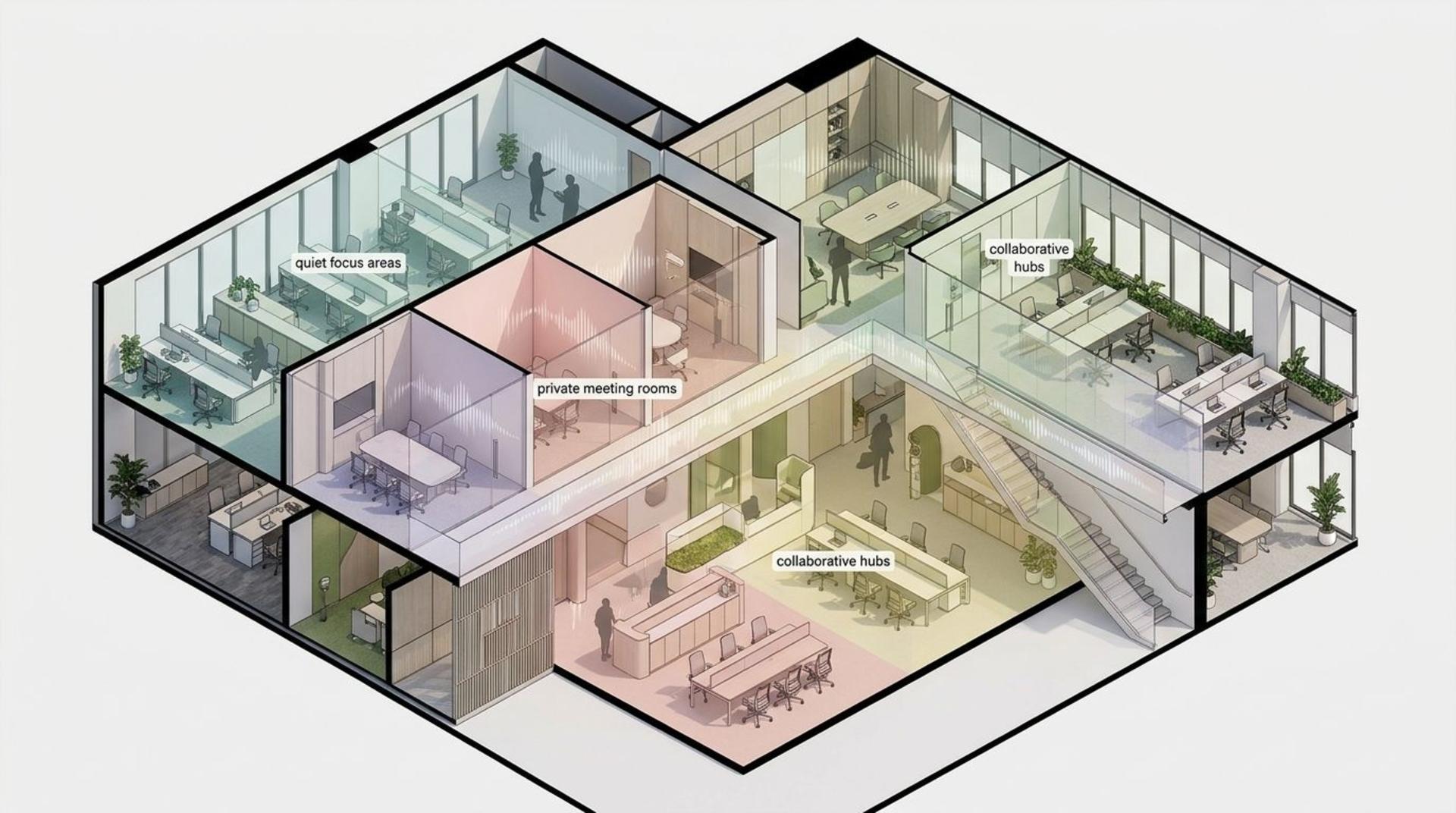
If acoustics reduce concentration...
If circulation creates operational bottlenecks...
The workplace may become increasingly frustrating despite its visual quality. Excellent photography does not always translate into an excellent workplace experience.
Design Success Extends Beyond Aesthetics
The same principle applies across many project types: a retail environment may impress visitors while making stock replenishment inefficient, a hospitality project may receive industry recognition while creating ongoing maintenance challenges, and a healthcare environment may appear visually sophisticated but complicate staff workflows.None of these examples necessarily diminish the quality of the design itself. Rather, they demonstrate that successful design must balance aesthetics with operational performance.
Design rarely exists in isolation.
It operates within a broader ecosystem of human behaviour, organisational objectives, business strategy, maintenance requirements, and long-term adaptability. Visual excellence represents only one component of overall success.
How Long-Term Performance Defines Success
One of the biggest challenges in evaluating design is that meaningful performance cannot always be measured immediately after project completion. Awards are generally judged soon after a project is finished. Long-term success emerges over time. It may take months or even years before organisations fully understand how effectively a space supports their operations.Questions worth asking include:
- Do employees actually use collaborative areas?
- Has customer engagement improved?
- Has workplace productivity increased?
- Are maintenance costs sustainable?
- Can the space adapt to organisational growth?
- Does the environment continue supporting business objectives?
These questions are difficult to answer during award judging.
Yet they often matter most to clients.
Comparing Design Awards and Long-Term Success
Neither approach is incorrect. They simply evaluate different aspects of the same project and the strongest projects perform well in both.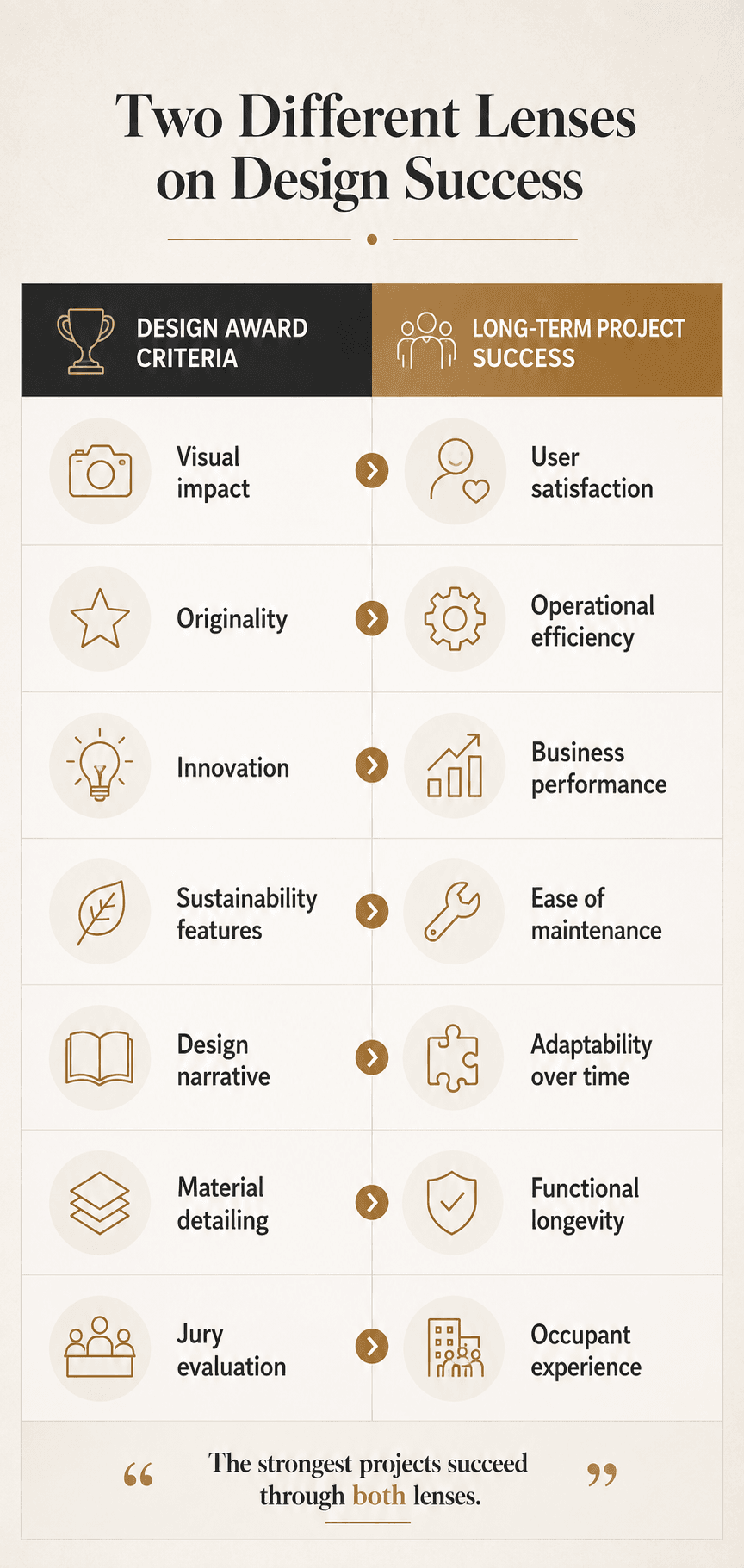
Why Human Behaviour Matters More Than We Think
Interior design ultimately serves people. No matter how visually compelling a project appears, its long-term value depends on how people interact with it. Successful environments encourage positive behaviours.For workplaces, this may include:
- Better collaboration
- Improved concentration
- Increased employee wellbeing
- Efficient workflows
- Easier communication
- Flexible team interaction
- Positive client experiences
These outcomes cannot always be captured through professional photography or presentation boards. They emerge through daily use. This is why post-occupancy evaluation is becoming increasingly important within the design profession.
Understanding how spaces perform after completion provides valuable insights that no award submission alone can reveal.
Recognition Should Never Become the Only Measure of Value
Awards remain valuable; They recognise extraordinary effort. They celebrate innovation. They encourage professional excellence. They help clients identify firms capable of delivering outstanding work.The concern arises only when awards become the primary definition of success.
A project should not automatically be considered successful simply because it has received industry recognition. Likewise, a project should not be considered unsuccessful simply because it has not.
Many exceptional projects never enter awards programmes. Some clients prioritise confidentiality. Others value operational outcomes more than public recognition. Success exists whether or not it receives a trophy.
The Most Effective Spaces Often Go Unnoticed
Some of the highest-performing environments are remarkably understated:- They do not attract headlines.
- They are not designed primarily for social media.
- They rarely become viral examples of architecture or interior design.
- Employees feel supported.
- Customers enjoy the experience.
- Operations run smoothly.
- Maintenance remains manageable.
Balancing Recognition with Real-World Performance
The most successful projects rarely force designers to choose between creativity and functionality. Instead, they integrate both.Great design should inspire. It should innovate. It should communicate a compelling vision.
At the same time, it should improve how people work, interact, and experience their environment. Professional recognition and operational performance should complement each other, not compete.
When creativity supports measurable outcomes, design delivers its greatest value.
Looking Beyond Opening Day
Ultimately, the success of a project cannot be judged solely by how it looks when the ribbon is cut. Its true value becomes visible much later.It is measured through years of consistent performance.
Through employees who enjoy coming to work.
Through customers who have positive experiences.
Through businesses that continue achieving their goals.
Through environments that adapt as organisations evolve.
Recognition may celebrate excellence. Performance sustains it. The most successful projects are not defined solely by how they look on opening day. They are defined by how effectively they continue serving their purpose long after the photographs have been taken.
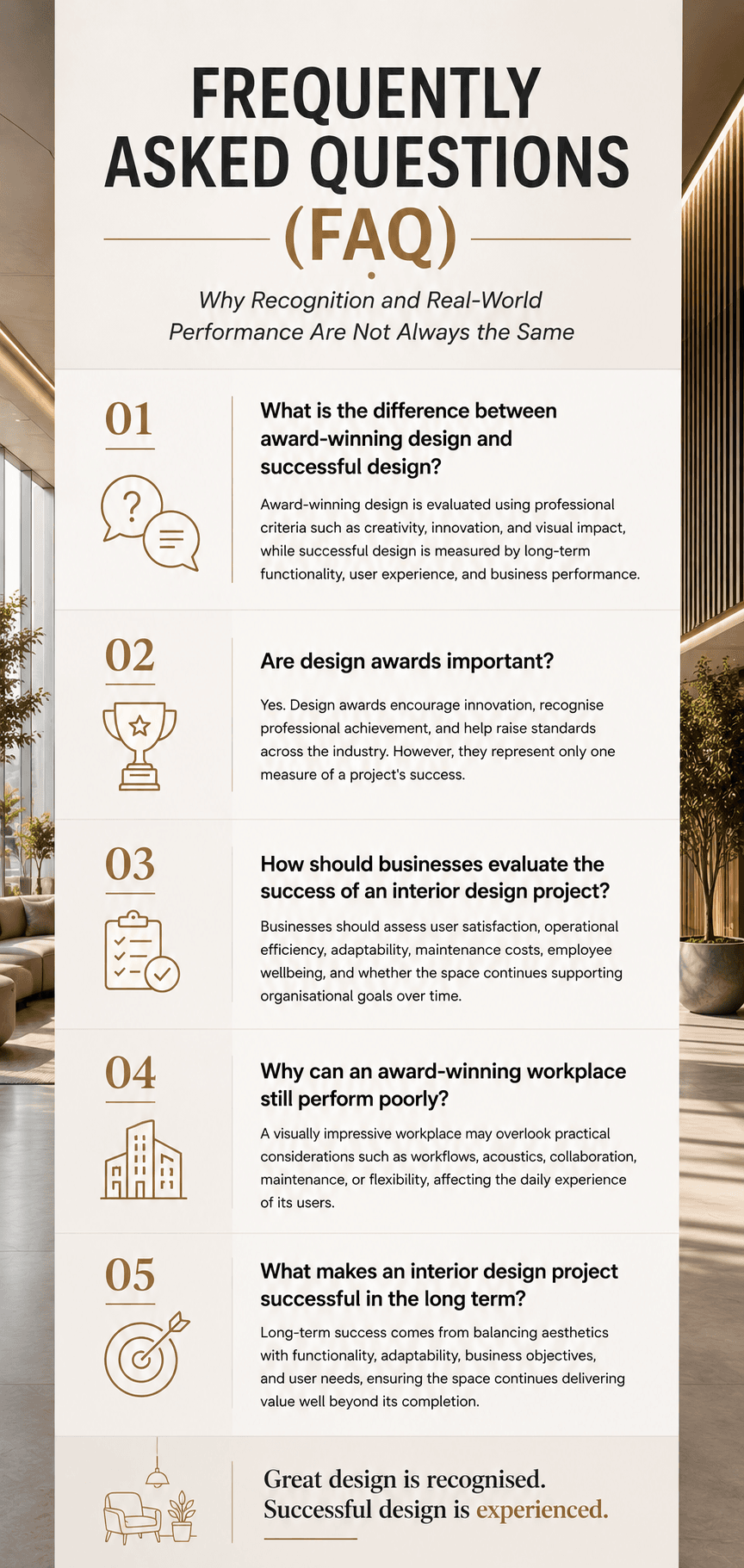
Frequently Asked Questions (FAQ)