A Founder’s Perspective: The Support System You Build Within
After 41 years in the industry, Ed Mun shares a defining insight: true resilience and leadership come from the internal support system you build, not the external one you rely on.

After 41 years in the industry, you start to notice a pattern. Not in trends. Not in materials. Not even in design. In people.
I’ve seen talented individuals fail in stable environments. And I’ve seen average individuals build extraordinary outcomes under pressure. The difference is rarely external.
It comes down to one thing:
the support system they’ve built within themselves.
The Misconception of External Support
Early in your career, you look outward. You look for:
- Mentors to guide you
- Teams to stabilise you
- Systems to carry you
And these matter. They do.
But over time, you realise something uncomfortable:
external support is inconsistent.
Teams change.
Markets shift.
Clients become unpredictable.
Even your closest collaborators evolve in ways you cannot control.
If your stability depends entirely on what surrounds you, then your direction will always be reactive.
What 41 Years Actually Teaches You
Longevity teaches you discipline, not just expertise. It forces you to confront:
- Uncertainty without reassurance
- Decisions without perfect information
- Responsibility without immediate validation
At some point, you stop asking:
“Who will support me through this?”
And you start asking:
“Am I built to handle this?”
That shift is not motivational. It is structural.
The Architecture of Internal Support
People often think resilience is emotional. It’s not. Resilience is a system. A personal framework made up of:
- Clarity of thought — the ability to filter noise from signal
- Emotional regulation — not the absence of pressure, but control within it
- Decision integrity — standing by choices even when outcomes are delayed
- Self-accountability — removing the habit of external blame
This is not something you’re born with. It is something you construct. Deliberately, repeatedly, often under strain.
Why This Matters in Design and Business
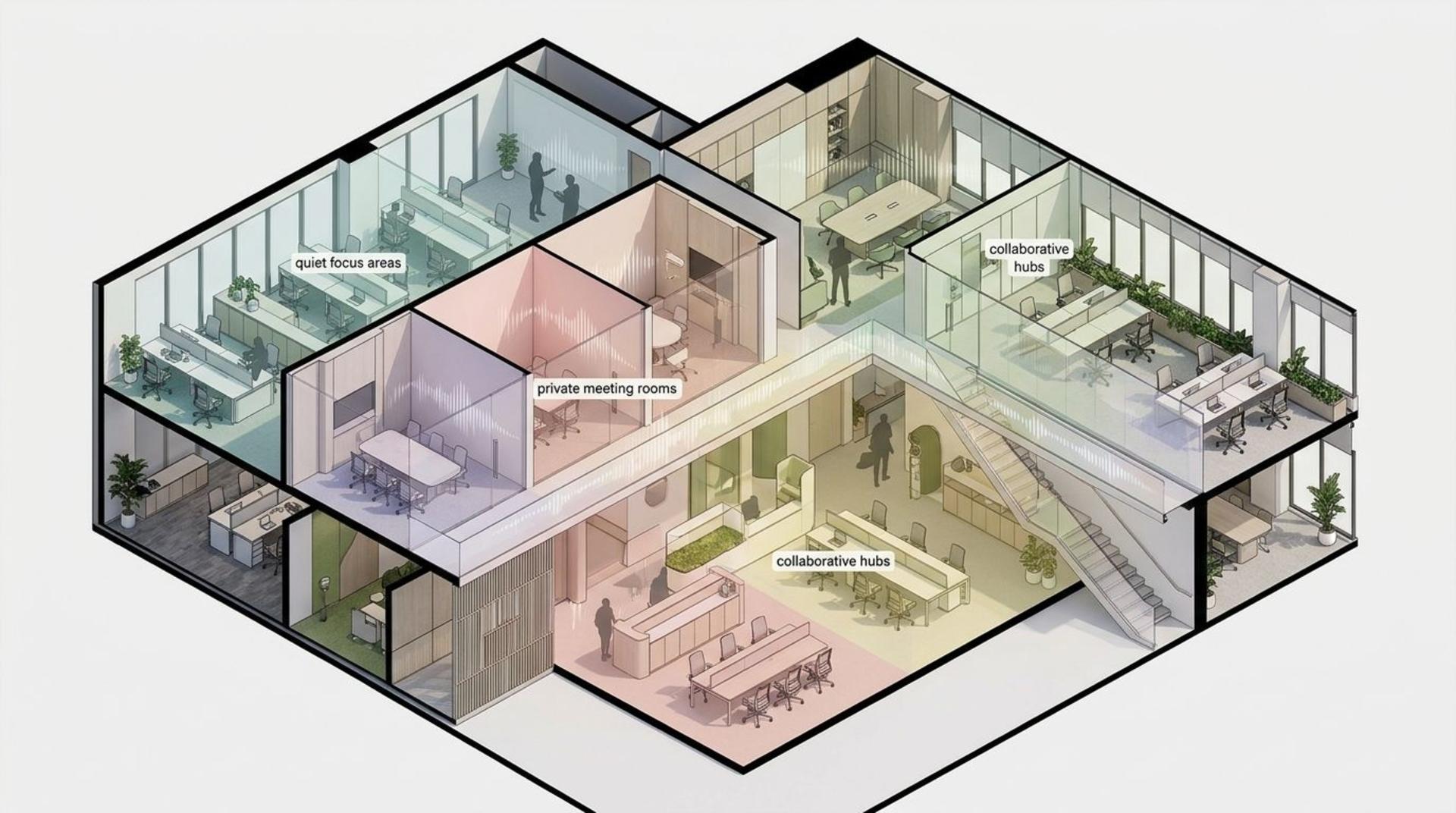
In our field, decisions carry weight. Every space we design affects:
- How people think
- How teams interact
- How businesses perform
There is no room for indecision masked as collaboration. No space for insecurity disguised as flexibility. If the designer or the leader lacks internal grounding, the work reflects it. You see it in:
- Overdesigned spaces trying to compensate for unclear intent
- Inefficient layouts driven by hesitation
- Compromises made to avoid difficult conversations
Strong environments come from strong internal frameworks.
Independence Is Not Isolation
Building internal support does not mean rejecting others. It means you are no longer dependent on them for stability. You can:
- Collaborate without losing direction
- Receive feedback without losing clarity
- Adapt without losing structure
This is where real leadership begins. Not when you have control over others, but when you have control over yourself.
The Long-Term Advantage
Over time, the gap becomes obvious. Those who rely only on external support:
- Slow down when conditions change
- Hesitate when certainty disappears
- Burn out when pressure increases
Those who build internal systems:
- Remain consistent under variability
- Make decisions with conviction
- Sustain performance over decades
This is not talent. This is construction.
A Closing Thought
After 41 years, the lesson is simple but not easy:
You can build a career on opportunity. You can build a reputation on skill. But you sustain both on what you’ve built within yourself. Because in the moments that matter most, when timelines compress, stakes rise, and clarity disappears. The only system that is guaranteed to hold is the one you’ve constructed internally.