Smart Office Design in Malaysia: What a Future-Ready Workplace Really Needs
From touchless systems to adaptive lighting and integrated AV, smart offices are no longer a gimmick—they are becoming a practical standard for modern corporate spaces in Kuala Lumpur.

Smart Office Design in Malaysia: What a Future-Ready Workplace Really Needs
From touchless systems to adaptive lighting and integrated AV, smart offices are no longer a gimmick—they are becoming a practical standard for modern corporate spaces in Kuala Lumpur.
The skyline of Kuala Lumpur is a testament to rapid evolution. From the sleek glass facades of TRX to the repurposed industrial hubs in Petaling Jaya, the way we work is shifting. For years, the "smart office" was often dismissed as a futuristic novelty—a playground for Silicon Valley giants filled with beanbags and unnecessary gadgets.
However, as we look toward 2026, the narrative has fundamentally changed. In Malaysia, smart technology is no longer an "extra"; it is the backbone of operational efficiency, employee retention, and environmental sustainability. For business owners and workplace decision-makers in KL, building a future-ready office is about more than just buying the latest hardware—it’s about integrating intelligence into the very fabric of interior design.
Why Smart Offices Matter in 2026
By 2026, the Malaysian corporate landscape will be defined by three pillars: agility, employee well-being, and ESG (Environmental, Social, and Governance) compliance. The traditional office model—rows of fixed desks and stagnant boardroom configurations—is no longer sufficient to meet these demands.
Smart offices matter today because they solve the friction points of modern work. As Malaysian companies compete for top-tier talent, the "workplace experience" has become a powerful recruitment tool. Creative agencies and tech startups in KL are already seeing the benefits; by installing smart lighting systems that adjust to natural light and AI tools for space management, they aren’t just saving electricity—they are creating an environment where teams feel energized and empowered to collaborate.
Beyond the "cool factor," there is a cold, hard business case. With rising real estate costs in Klang Valley, efficiency is paramount. A smart office provides data. It tells you which rooms are actually being used and which are dead space, allowing business owners to optimize every square meter of their rental.
What Defines a Smart Office Today
A smart office is not merely an office with fast Wi-Fi and a few Google Nest devices. Today, a truly smart workplace is defined by interconnectivity and responsiveness. It is an ecosystem where the physical environment reacts to the people within it.
In 2026, a smart office is defined by:
The Essential Systems: Lighting, Climate, AV and Access
To build a high-performing office in KL, you must prioritize the systems that impact daily operations the most.
Lighting and Occupancy
Smart lighting is the "low-hanging fruit" of office tech. By using occupancy sensors and "daylight harvesting" (where indoor lights dim as sunlight floods through the windows), KL firms are slashing energy bills. But it’s also about health. Tunable LED lighting can shift from a crisp blue-white for focus in the morning to a warmer amber in the late afternoon, reducing eye strain and improving mood.Climate and Air Quality
In Malaysia’s tropical climate, the air conditioner is usually the biggest energy drain. Smart HVAC (Heating, Ventilation, and Air Conditioning) systems integrated with CO2 sensors ensure that fresh air is circulated exactly when and where it's needed. Integrating these systems with vertical greening and indoor plants not only assists with humidity control but has been shown to reduce employee stress effectively.Integrated AV (Audiovisual)
With the rise of the "Zoom room," AV is no longer just a screen on a wall. It requires high-fidelity microphones, 360-degree cameras, and acoustic treatments to ensure that those joining remotely feel as present as those in the room.Smart Access and Security
Touchless systems are now the standard. From face-recognition entry to mobile-based digital keys, smart access creates a friction-free transition from the lobby to the desk while maintaining high-security standards required by Malaysian DOSH (Department of Occupational Safety and Health) regulations.How Smart Technology Supports Hybrid Work
The "nine-to-five" at a fixed desk is a relic of the past. Today’s Malaysian workforce demands flexibility. Compared to five years ago, hybrid offices in KL now prioritize hot-desking and modular furniture.
Smart technology is the glue that prevents hybrid work from becoming chaotic. Desk-booking apps allow employees to see where their teammates are sitting before they even leave their homes, fostering "intentional collaboration." Wireless sensors track usage, showing firms where they can potentially shrink workstation counts by up to 30%. This "found" space can then be repurposed into multipurpose areas—lounges, "nap pods," or informal meeting spots that double as relaxation zones. This shift isn't just about saving space; it’s about acknowledging that people come to the office to connect, not just to sit at a screen.
Designing Tech That Does Not Disrupt Aesthetics
The biggest challenge for interior designers is "tech clutter." A forest of cables and bulky hardware can ruin a beautifully curated brand identity. The goal of modern smart office design is to make technology invisible.
In KL, we are seeing a trend toward the "raw and refined." Industrial-style offices utilize metal-framed glass partitions and exposed ceilings. Designers are hiding sensors within these structural elements—tucking occupancy sensors into cable trays or integrating air quality monitors into bespoke wood paneling.
Cable management is no longer an afterthought; it is integrated into the furniture. Desks with built-in wireless charging and cable-management spines ensure a clean look. When tech is integrated elegantly, it feels like part of the architecture, turning a functional requirement into a branded feature that enhances the perceived value of the space.
Budget Priorities: Where Smart Investments Pay Off
When planning a fit-out, the question is always: How much is this going to cost?
In Kuala Lumpur, outfitting a mid-sized smart office with basic sensors, modular setups, and integrated lighting typically runs between RM 150 to RM 250 per square meter for the fit-out. While it’s tempting to spend big on "flashy" AV for the boardroom, the biggest Return on Investment (ROI) actually comes from flexible zoning.
Investing in moveable partitions, modular power tracks, and space-tracking sensors delivers long-term value because it future-proofs the office. If your headcount grows or your workflow changes, you can reconfigure the office without a total renovation. Prioritizing energy-efficient lighting and smart AC also pays for itself in reduced operational costs, often within the first 18-24 months.
Common Mistakes in Smart Office Planning
What Malaysian Companies Should Consider Before Implementation
Before jumping into a smart office project, Malaysian firms must conduct a space audit. This involves mapping how employees actually move through the office. Are the meeting rooms always empty while the cafe area is packed? Do people need more video-conferencing booths or more collaborative lounges?
Furthermore, companies must ensure compliance with local regulations. UBBL (Uniform Building By-Laws) and DOSH have strict requirements for fire safety and ergonomics. For instance, any smart partition must not obstruct fire sprinklers or exit paths. Additionally, many KL firms are now aiming for GBI (Green Building Index) certification; choosing energy-efficient smart systems is a major step toward achieving this rating and benefiting from associated tax incentives.
Creating a Future-Ready Workplace with Design Leadership
The transition to a smart office is a journey, not a destination. It requires a partnership between IT, HR, and Interior Design. The most successful smart offices in Kuala Lumpur are those where the technology feels organic—where a creative agency can move from a brainstorming session on a writable wall to a high-tech presentation seamlessly.
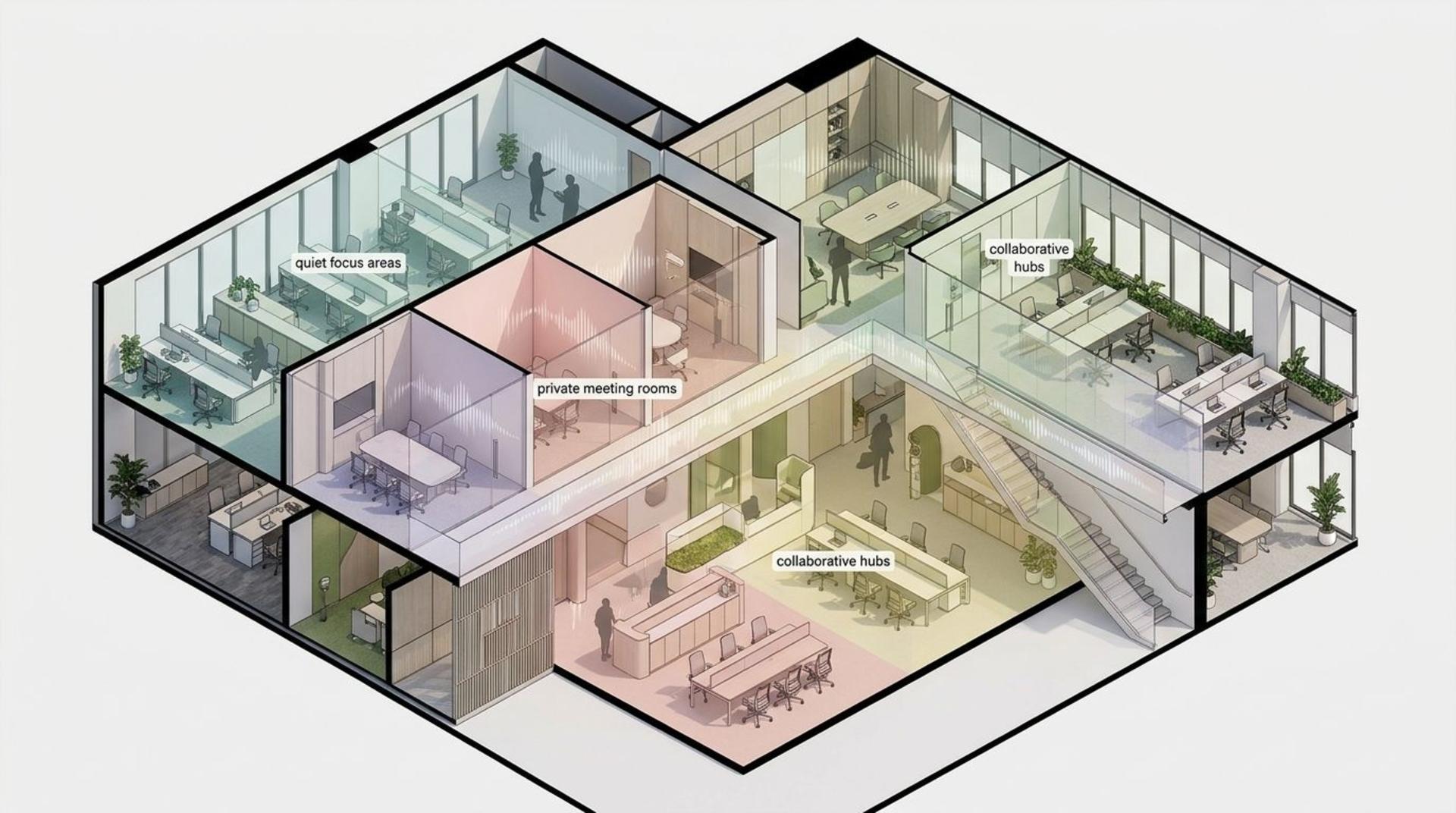
By focusing on activity zoning—dividing the office into focus zones, collaboration areas, and social lounges—you cater to both the cultural needs of the Malaysian workforce and the technical requirements of a digital age.
A future-ready workplace is one that is ready for change. It uses data to evolve, technology to empower, and design to inspire. For KL business owners, the message is clear: the smart office is no longer the office of the future. It is the office of now. By investing in thoughtful, tech-integrated design today, you aren't just building a place to work; you are building a platform for your company's future growth.