Why Interior Design Projects Fail Before Design Starts
Discover why most interior design projects fail before design begins. Learn the planning mistakes that cause delays, budget overruns, and poor outcomes.

Why Interior Design Projects Fail Before Design Starts
Many organisations assume that an interior design project begins when sketches are presented, mood boards are discussed, or materials are selected. In reality, the success or failure of a project is often determined much earlier.When a project runs over budget, misses deadlines, or fails to meet expectations, the design is often the first thing blamed. The reality is that many interior design projects are already heading toward failure long before a designer begins sketching concepts or selecting materials.
After decades in the industry, one pattern remains remarkably consistent: the most successful projects are rarely the ones with the largest budgets or the most ambitious visions. They are the ones that begin with clarity.
Many clients believe they need a design solution when what they actually need is a business decision. Interior design is not simply about creating attractive environments. It is about solving business challenges through thoughtful spatial planning, strategic thinking, and clear objectives.
Organisations that invest time in defining those objectives before the design process begins consistently experience smoother project delivery, better collaboration, and stronger long-term outcomes.
The Importance of Defining Clear Objectives
Without clearly defined objectives, every design decision becomes subjective. Different stakeholders often enter a project with completely different expectations.Management may focus on financial efficiency.
Operations may prioritise workflow.
Marketing may want stronger brand expression.
Human Resources may care most about employee wellbeing.
Employees themselves often value comfort, flexibility, and functionality.

None of these perspectives are wrong. The challenge arises when nobody agrees on which objectives matter most. Without alignment, the design team receives conflicting feedback throughout the project.
This often leads to:
- Multiple rounds of revisions
- Delayed approvals
- Conflicting instructions
- Budget increases
- Scope changes
- Frustration among everyone involved
Instead of solving design challenges, the project team spends valuable time resolving organisational disagreements.
Too Many Decision Makers Create Confusion
Another common issue is the absence of a clear decision-making structure. Interior design projects frequently involve numerous stakeholders. While collaboration is valuable, unclear authority creates unnecessary complexity.Without one person or committee holding final authority, every decision becomes open to debate. As priorities shift between meetings, designers receive contradictory instructions. The project gradually slows down while costs continue increasing. One clear decision-making framework often prevents months of unnecessary revisions.
When Project Goals Keep Changing
Business priorities naturally evolve. Markets change. Teams grow. Technology advances. However, constantly changing project objectives during the design process creates significant risks.
A project that begins as a workplace transformation can gradually become:
A branding initiative
A recruitment strategy
A cost-saving exercise
A sustainability project
A cultural transformation programme
Each objective is valuable.
The difficulty arises when every objective is pursued simultaneously without establishing clear priorities. When everything becomes important, decision-making becomes increasingly difficult. Design teams cannot optimise every outcome equally. Successful projects establish priorities early and revisit them only when absolutely necessary.
Why Everyone Has a Different Definition of Success
Perhaps the most overlooked issue is assuming everyone shares the same understanding of success. Clients frequently use words like:- Modern
- Innovative
- Premium
- Flexible
- Collaborative
- Future-ready
For one stakeholder, a collaborative office may mean open-plan workstations.
For another, collaboration may require more meeting rooms, quiet zones, and hybrid work technology.
Similarly, "premium" may refer to luxury finishes for one person, while another defines it through hospitality, customer experience, or workplace technology. Unless these expectations are translated into measurable objectives, they remain open to interpretation. That ambiguity creates misunderstandings throughout the project lifecycle.
The Questions Every Project Should Answer First
Before discussing layouts, furniture, finishes, lighting, or materials, organisations should answer several fundamental questions. These conversations may not appear as exciting as design presentations. However, they often determine whether a project succeeds or struggles.Clarity Is the Foundation of Successful Interior Design
Design has the power to improve how organisations operate.It can strengthen culture.
It can enhance customer experiences.
It can improve employee wellbeing.
It can reinforce brand identity.
It can increase operational efficiency.
However, even exceptional design cannot compensate for unclear objectives. When organisations begin projects without defining problems, priorities, and success measures, designers are left solving symptoms rather than root causes.
The strongest interior design projects begin with conversations not concepts. Before a designer creates solutions, everyone involved must first agree on what problem needs to be solved. That clarity becomes the foundation upon which every successful project is built.

The Role of Interior Designers Beyond Aesthetics
Many people still associate interior designers primarily with colours, finishes, furniture, and visual styling. While aesthetics remain important, modern interior design is increasingly strategic.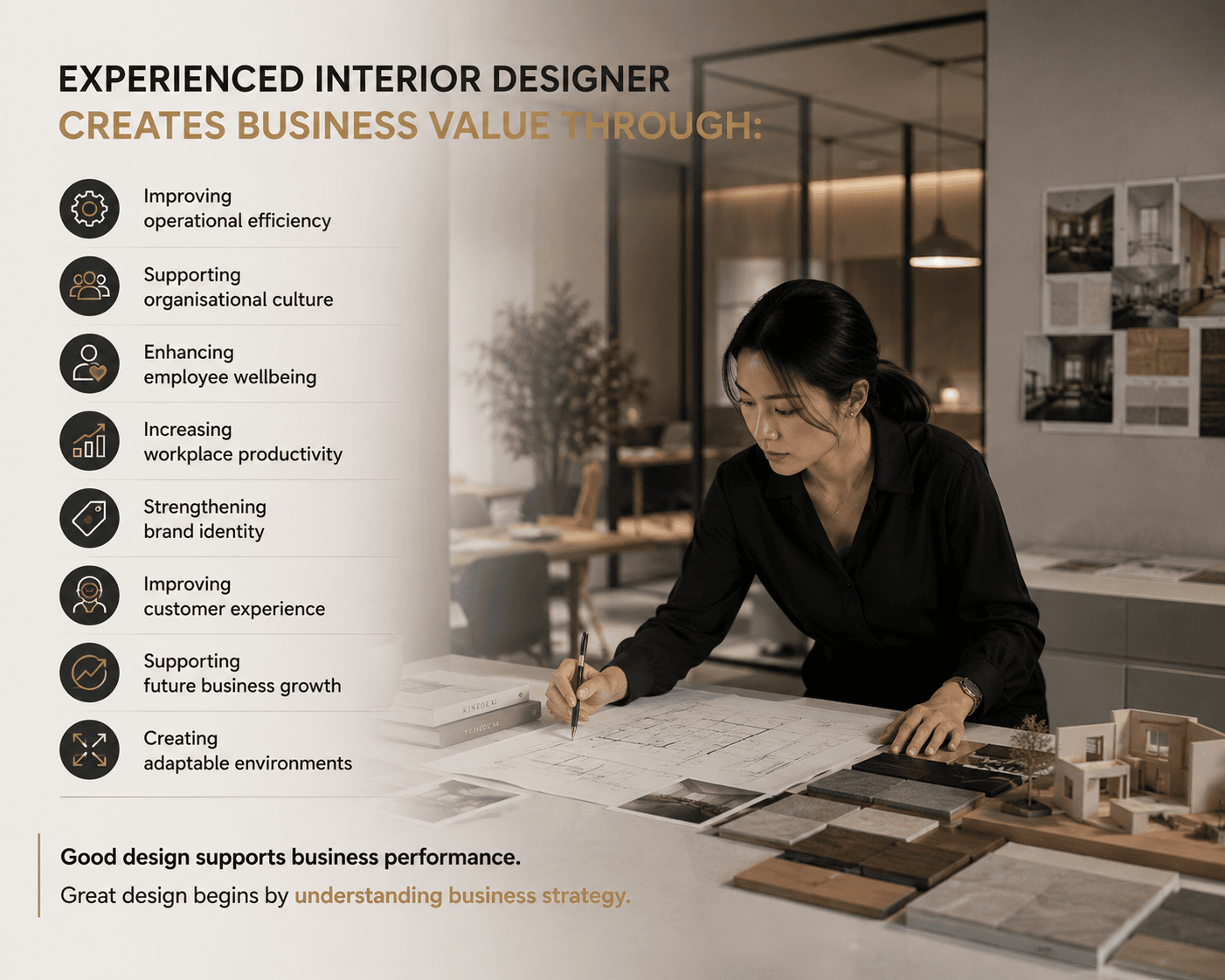
Why Early Planning Saves Time and Money
One of the biggest misconceptions in interior design is that spending more time planning delays a project. The opposite is often true.Projects with clear objectives generally experience:
- Faster approvals
- Fewer design revisions
- Better stakeholder alignment
- More predictable budgets
- Shorter project timelines
- Reduced construction variations
- Higher user satisfaction after completion
Investing additional time before design begins usually reduces delays later in the project.
It is significantly less expensive to clarify objectives during planning than to change completed designs or modify construction work.
Frequently Asked Questions (FAQ)