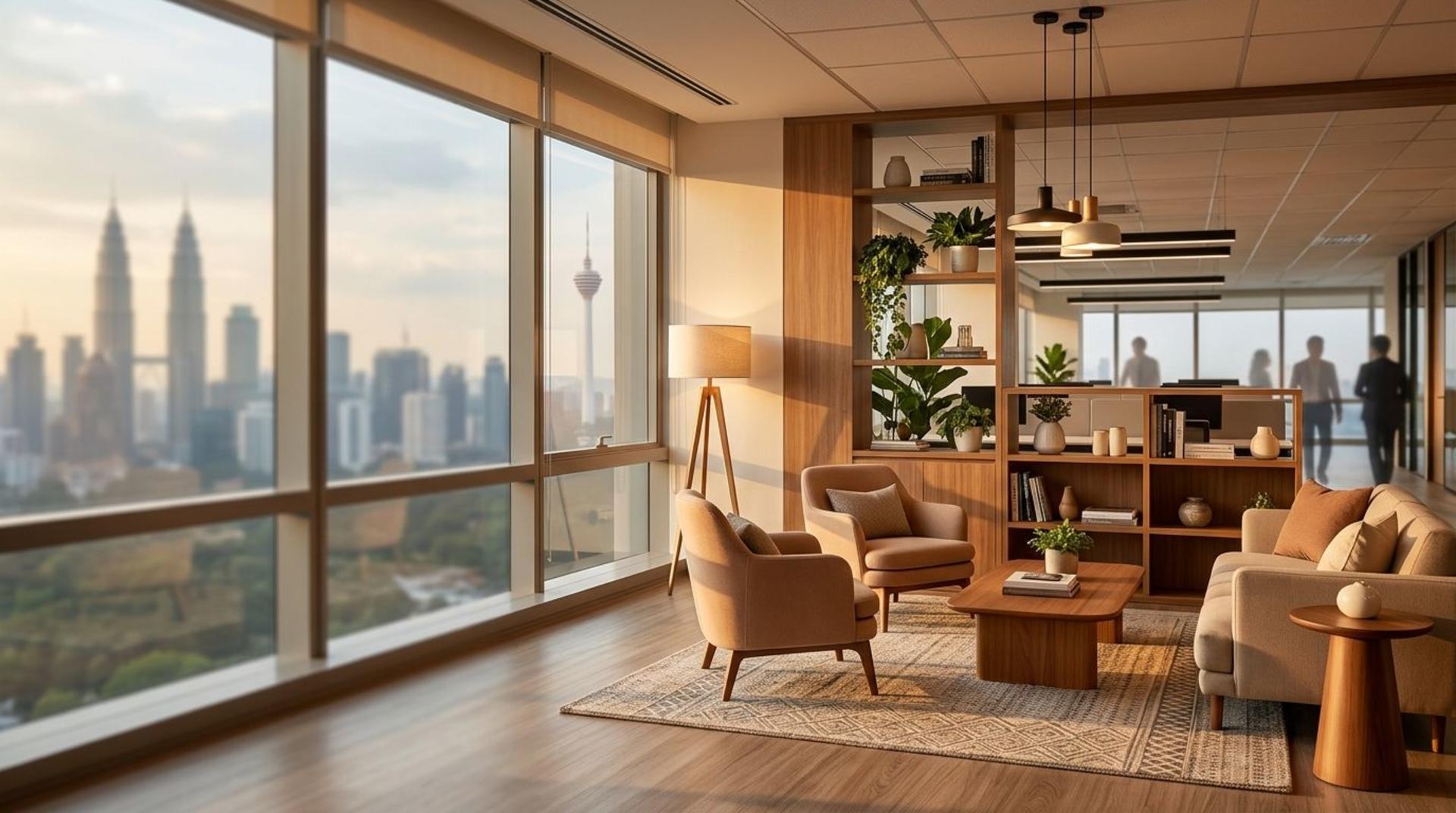
Biophilic Design in Malaysian Offices: Better Wellbeing, Focus and ROI
A practical guide for corporate clients on using Malaysia-inspired natural elements to create healthier, more productive workplaces. Learn how tropical planting, green walls and sensory design can support employee wellbeing while delivering long-term business value.
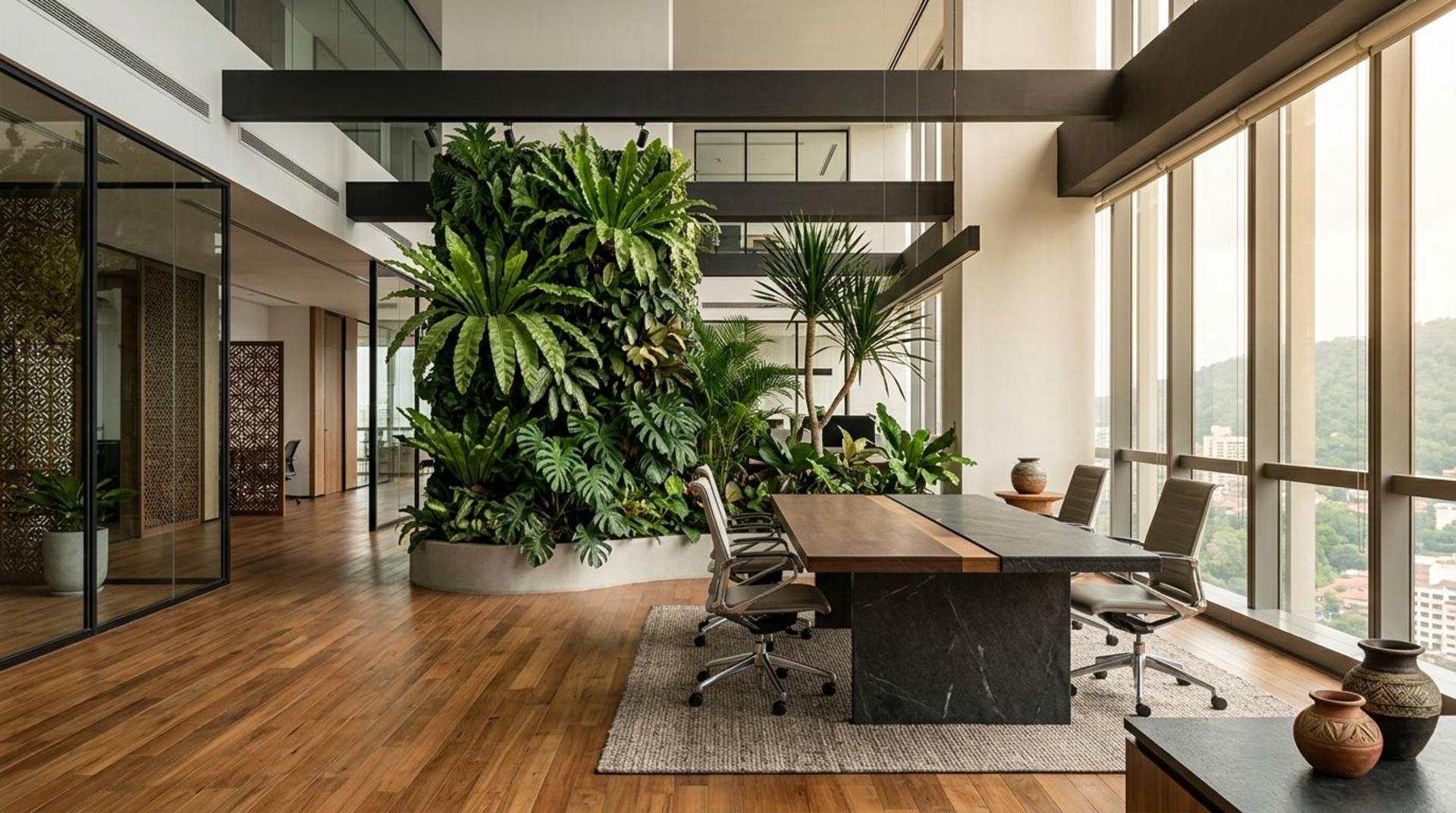
Title: Biophilic Design in Malaysian Offices: Better Wellbeing, Focus and ROI
Subtitle: A practical guide for corporate clients on using Malaysia-inspired natural elements to create healthier, more productive workplaces. Learn how tropical planting, green walls and sensory design can support employee wellbeing while delivering long-term business value.
*
Why Biophilic Design Matters for Malaysian Offices in 2027
As we navigate the corporate landscape of 2027, the role of the physical office has fundamentally transformed. Malaysian businesses are no longer just competing with rival firms for top talent; they are competing with the comfort, autonomy, and quiet focus of the work-from-home environment. To draw employees back to the office voluntarily, corporate spaces must offer an experience that cannot be replicated at a kitchen table. Enter biophilic design—an architectural and interior design philosophy that satisfies the innate human desire to connect with nature.
For Malaysian offices, biophilic design is no longer a peripheral wellness perk or a fleeting trend; it is a strategic necessity. Urban density in Kuala Lumpur, combined with high-stress corporate cultures, creates a pressing need for environments that actively reduce anxiety and enhance cognitive recovery. Standard corporate layouts, defined by grey carpets, fluorescent lights, and sterile partitions, are being rapidly phased out because they drain energy and inspiration.
Looking forward, forward-thinking business leaders recognize that integrating nature into the workplace is a powerful lever for corporate success. Biophilic environments have been scientifically proven to lower cortisol levels, lower blood pressure, and boost creative problem-solving. In 2027, building a successful office in Malaysia means engineering a space that actively cares for the people within it, setting the stage for long-term operational resilience and a thriving corporate culture.
What Biophilic Design Really Means in a Corporate Workplace
There is a common misconception that adopting biophilic design simply means dragging a few potted plants into an open-plan office. Just five years ago, many Malaysian corporate offices thought exactly that, sticking entirely to isolated potted ferns placed haphazardly in corners. Today, however, companies are shifting toward full biophilic immersion. True biophilic design in a corporate workplace is a multisensory experience that dictates layout, material selection, lighting, and acoustic management.
Modern biophilic spaces move away from sharp, sterile geometries. We are seeing the rise of organically curved, plant-integrated furniture that guides foot traffic naturally through a space, mimicking the flow of a forest path. Tactile, grounding materials have replaced cold metal and sterile glass. Rattan screens, brushed stone, and exposed wood grains are utilized to create a more grounded, earthy atmosphere that supports modern hybrid work flexibility.
Furthermore, it is about engaging all the senses. Biophilic design today includes mossy feature ceilings that not only look visually striking but serve a highly functional acoustic purpose by absorbing sound in noisy open-plan layouts. It encompasses how natural light is filtered, how air moves through a space, and how materials feel to the touch. It is an intricate ecosystem designed to make the human brain feel at ease in an otherwise highly digitized corporate environment.
The Business Case: How Nature-Inspired Offices Improve Wellbeing and Productivity
For decision-makers, any interior design upgrade must make commercial sense. The business case for biophilic design relies heavily on its undeniable impact on human performance. Cognitive fatigue is one of the leading causes of lost productivity in the corporate world. When employees are constantly exposed to artificial lighting and harsh acoustics, their ability to concentrate degrades as the day progresses. Nature-inspired offices provide "micro-restorations"—brief moments of sensory relief that reset the brain’s attention span.
A compelling, often counterintuitive insight comes from acoustic management in bustling Kuala Lumpur offices. One might assume that adding water features would contribute to the noise, but gentle, cascading water walls in reception and holding areas actually serve an essential purpose. Instead of drowning out conversations, the sound of flowing water effectively masks distracting urban noise and harsh office chatter. It creates a soothing, white-noise backdrop that significantly enhances deep concentration.
When this acoustic strategy is paired with warm, 3000K lighting, premium corporate spaces undergo a psychological transformation. The environment begins to feel unexpectedly home-like and welcoming. These subtle, nature-driven environmental tweaks are directly correlated with reduced absenteeism and higher daily productivity. By lowering ambient stress, companies find that employees are much more eager to return onsite, ultimately driving up the ROI of the real estate footprint.
Local Relevance: Bringing Malaysian Biodiversity into Interior Design
A highly effective biophilic office in Malaysia shouldn't look like it was uprooted from a Scandinavian catalog; it should reflect the rich biodiversity and cultural heritage of its location. Local relevance is paramount. Culturally, biophilic designs in Malaysia are increasingly blending tropical greens with traditional heritage motifs. For instance, incorporating batik-inspired patterns onto woven rattan dividers resonates deeply with local teams. Instead of viewing these touches as kitsch, diverse workforces see them as comforting, grounding elements.
This subtle fusion of the natural and the cultural creates spaces that feel authentically Nusantara. In multicultural firms, meeting rooms that integrate these heritage motifs have actually been linked to higher employee retention, as individuals feel a sense of rooted cultural pride amid sleek, premium corporate settings.
Environmentally, embracing Malaysian biodiversity is also highly practical. Under the Green Building Index (GBI), urban offices can earn higher certification points by selecting native plant species. Rather than fighting Kuala Lumpur’s tropical climate by importing delicate, temperate plants, local designers are selecting humidity-tolerant native species like orchids. These plants thrive in our local conditions, ensuring that vibrant colors and lush foliage can be sustained naturally without the need for constant, costly replacements.
Key Biophilic Elements for Premium Corporate Spaces
To elevate a standard office into a premium biophilic space, designers rely on a specific palette of natural elements. High-end spaces achieve a sophisticated look by focusing on subtle, high-quality integrations rather than jungle-like overgrowth. Firms like those partnering with Surface R Design have successfully demonstrated this by weaving natural timber finishes, stone accents, and subtle greenery walls into premium lobbies and breakout areas. The result is an environment that feels lived-in, warm, and inviting without overwhelming the modern, professional aesthetic.
Lighting is another critical element. A common best practice from seasoned Malaysian interior veterans involves managing the region's intense sunlight. Rather than blocking out the sun entirely with heavy blinds, designers are layering filtered daylight. By using sheer fabrics alongside vertical timber slats in high-humidity KL offices, designers can eliminate harsh screen glare while mimicking the dappled light found on a forest floor. This dynamic, moving light has been shown to keep circadian rhythms in check and sharpen employee focus during long afternoon workdays.
Finally, air quality and airflow are addressed through the strategic placement of broad-leafed plants that act as natural air purifiers, alongside HVAC systems configured to provide gentle, varying breezes, replicating the feeling of fresh outdoor air circulating through a premium boardroom.
Where to Apply Biophilic Design in the Office for Maximum Impact
Strategic placement of biophilic elements maximizes both employee impact and budget efficiency. The reception area is the natural starting point. As the first touchpoint for both staff and visiting clients, a biophilic lobby sets an immediate tone of calm, stability, and premium hospitality.
However, the most profound impacts are observed in collaborative and adaptive zones. Designers are increasingly utilizing large tropical plants like monstera and lush ferns to define spaces, creating quiet pods that double as focused work nooks or casual team huddles. This softer approach to zoning replaces the psychological barrier of closed doors and glass walls with accessible, natural boundaries.
Meeting rooms are also undergoing a biophilic revolution. One notable transition in recent Kuala Lumpur projects involves swapping out rigid, intimidating boardrooms for plant-framed meeting pods. Surrounding a collaboration space with greenery instantly makes the room feel less intensely corporate. It lowers defensive postures, boosts casual interaction, and creates a sense of psychological safety that is critical for organic idea-sharing and brainstorming.
Regional Case Studies and Lessons from Southeast Asian Workplaces
Real-world applications across Southeast Asia have provided valuable data on how these environments alter human behavior. In several recent KL-based corporate refits, the introduction of subtle greenery and timber-accented architectural features dramatically changed how employees utilized the floorplan.
Historically, corporate breakout areas and pantries were transient spaces—places to grab a coffee and immediately retreat to a desk. However, after integrating biophilic elements, companies reported a significantly calmer atmosphere that encouraged longer stays in these collaborative zones. Underused, sterile spaces were organically transformed into natural social hubs.
Following the shift from rigid boardrooms to plant-framed meeting pods, behavioral observations noted a distinct change in post-meeting dynamics. Managers reported that teams were lingering longer after formal meetings concluded. Instead of rushing back to their desks, employees stayed in the leafy, relaxed environments to brainstorm, resulting in highly valuable, organic idea-sharing that previously did not happen. These regional case studies prove that when spaces feel naturally welcoming, collaboration happens effortlessly.
Cost vs Value: Understanding ROI for Biophilic Office Investments
For procurement teams and CFOs, the question always comes down to numbers. Premium biophilic integrations require upfront capital, but viewing them strictly as a sunk cost misses the broader financial picture. The return on investment (ROI) is measured through reduced employee turnover, lowered healthcare costs from stress-related absenteeism, and the optimization of expensive commercial real estate.
Consider a practical benchmark: an upfront investment of around RM50,000 for a comprehensive, mid-sized biophilic breakout zone. While this is a notable initial expenditure, businesses report that the cost pays off rapidly. As hybrid employees choose to spend more days in the office, real estate utilization improves. Furthermore, productivity holds steady because cognitive fatigue is mitigated.
When you factor in the high costs associated with recruiting and onboarding new staff due to burnout-related turnover, an RM50,000 investment to create a collaborative space where teams actively want to work is highly cost-effective. The value of an office that serves as a talent attraction tool far outweighs the capital expenditure of timber slats, native plants, and acoustic water features.
Maintenance Realities: Plant Care, Irrigation and Facilities Planning
The most beautiful biophilic office will quickly turn into a liability if maintenance realities are ignored during the design phase. A common hesitation among corporate clients is the fear of dying plants, pest infestations, and high ongoing landscaping bills. However, modern biophilic design relies on smart, low-maintenance systems rather than constant manual gardening.
Facilities planning is a crucial step. Professionals highly recommend coordinating closely with building management and facilities teams from day one to install automated drip irrigation tied directly to the building management system (BMS). This guarantees plants receive exactly the water they need—no more, no less—without requiring daily manual watering by cleaning staff.
Plant selection is equally critical for keeping maintenance low. To thrive in the continuous, air-conditioned humidity of KL offices, experts advise focusing on robust, pest-resistant local species like philodendrons. These native plants flourish in indoor tropical climates without daily fuss, allowing companies to enjoy the productivity benefits of a green office without the upkeep headaches associated with high-maintenance, imported exotics.
Common Mistakes to Avoid When Designing Nature-Inspired Offices
While the benefits are vast, poorly executed biophilic design can create operational nightmares. One of the most severe oversights relates to regulatory compliance, particularly Malaysia's Uniform Building By-Laws (UBBL). Green walls and living installations must incorporate completely non-combustible underlying materials and ensure strict fire safety standards. Ignoring this can lead to failed safety inspections and costly tear-downs.
Another frequent mistake is overplanting without localized, zoned irrigation and proper drainage. In a bid to create a "jungle" effect, some designers fail to account for Kuala Lumpur's baseline 80% average humidity. Unchecked tropical greenery, poor drainage, and excessive watering can quickly cause humidity spikes indoors. This not only leads to dangerous, slippery floors but can also generate musty odors and trigger mold growth in carpets and ceiling tiles.
Finally, relying on delicate, non-native plants purely for aesthetics is a costly error. Importing fragile temperate species into a tropical, high-humidity, heavily air-conditioned environment guarantees a high mortality rate. Designing a nature-inspired office requires respecting the local climate first and foremost.
How to Start a Biophilic Office Upgrade in Kuala Lumpur
Embarking on a biophilic office transformation does not require gutting your entire workspace overnight. Corporate clients can follow a strategic, phased approach to ensure success and alignment with business goals:
Final Thoughts: Designing Workplaces People Feel Better In
As we look toward the future of work in Malaysia, the mandate for corporate offices is clear: spaces must earn the commute. Biophilic design offers a profound solution to the challenges of modern corporate life by acknowledging that employees are human beings with natural biological needs.
Integrating elements like cascading water walls, warm lighting, local orchids, and heritage rattan does more than just make an office look beautiful—it fundamentally changes how people feel, think, and interact within those walls. By making strategic, culturally relevant, and maintenance-friendly biophilic investments, corporate leaders have the power to create a sustainable workplace that drives focus, champions employee wellbeing, and delivers enduring business value in 2027 and beyond.