Resimercial Office Design in Malaysia: How to Bring Residential Comfort into Corporate Workspaces for 2026
As hybrid work reshapes employee expectations, Malaysian companies are turning to resimercial design to make offices feel more welcoming, flexible, and worth returning to. This guide shows how Kuala Lumpur firms can balance home-like comfort with corporate performance.
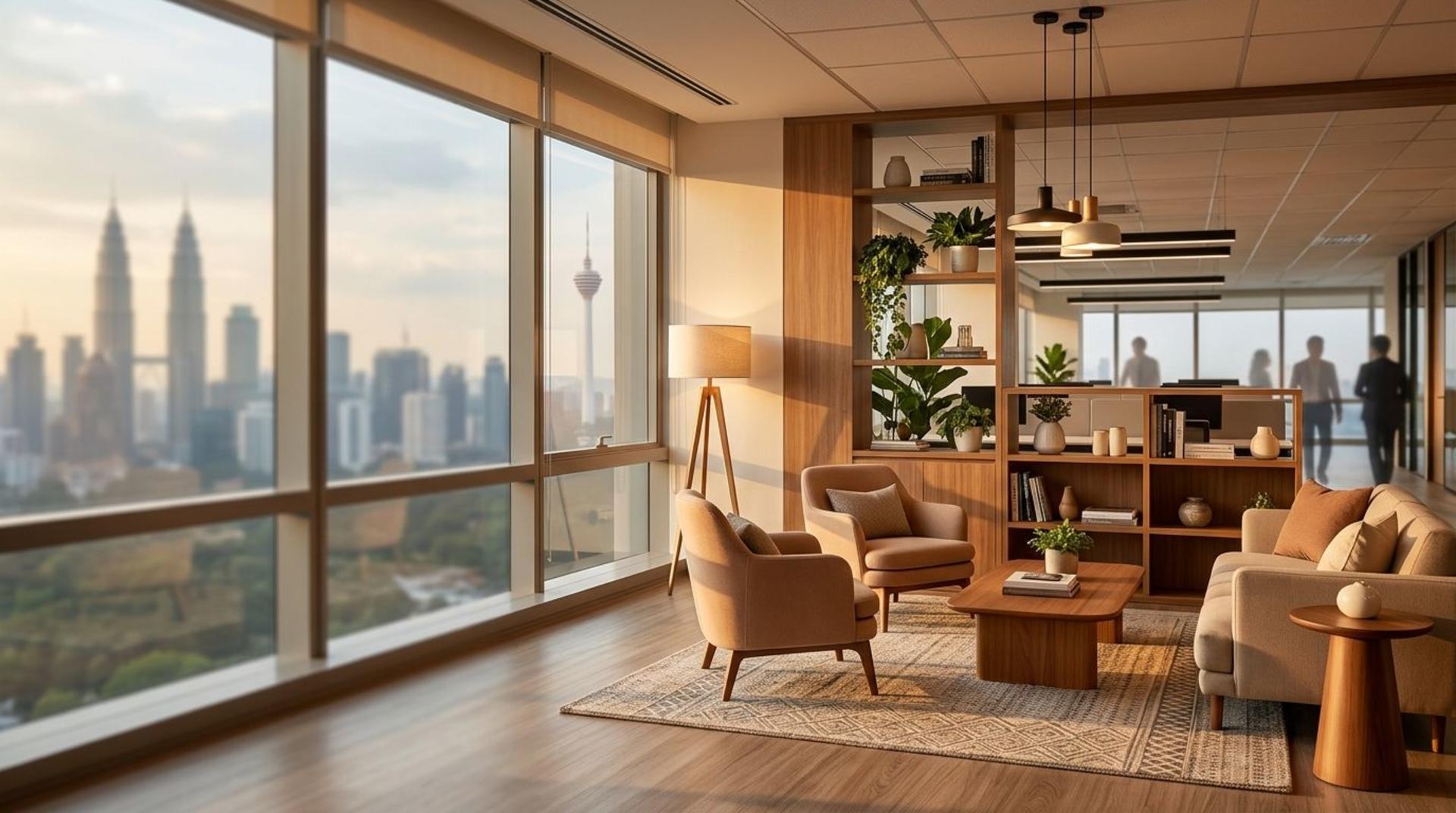
Title: Resimercial Office Design in Malaysia: How to Bring Residential Comfort into Corporate Workspaces for 2026
Subtitle: As hybrid work reshapes employee expectations, Malaysian companies are turning to resimercial design to make offices feel more welcoming, flexible, and worth returning to. This guide shows how Kuala Lumpur firms can balance home-like comfort with corporate performance.
The modern Malaysian workplace is at a crossroads. Today, as hybrid work solidifies itself as the standard rather than the exception, corporate leaders are grappling with a defining challenge for 2026: how to make the office a destination worth the commute. The answer lies in a transformative approach known as "resimercial" design.
A seamless blend of residential comfort and commercial durability, resimercial design is rapidly moving from a trendy buzzword to a fundamental workplace strategy. It acknowledges a simple truth—employees have grown accustomed to the comforts, autonomy, and relaxed atmospheres of their homes. To draw top talent back to the office, businesses must offer environments that feel just as inviting but are equipped with the collaborative tools and professional infrastructure that a home cannot provide.
This guide explores how companies in Kuala Lumpur and beyond can leverage resimercial design to elevate their workspaces, inspire their teams, and achieve a robust return on investment without compromising on brand sophistication.
What Resimercial Design Means for Corporate Offices in 2026
At its core, resimercial design relies on integrating the tactile warmth, visual appeal, and physical ease of a residential living space into a commercial environment. As we look toward 2026, this concept goes far beyond simply placing a velvet sofa in a corporate lobby. It represents a holistic shift in spatial planning.
Five years ago, most Malaysian offices strictly adhered to sterile, open-plan layouts defined by uniform rows of desks and rigid hierarchies. Today, the focus is on creating sensory experiences and psychological comfort. True resimercial design curates environments that reduce stress and promote well-being. It utilizes soft textiles, warm color palettes, ambient lighting, and varied seating postures to break down the cold, institutional feel of traditional corporate interiors. Yet, it operates strictly on commercial-grade durability, ensuring the space can withstand the rigors of an active, eight-hour workday.
Why Malaysian Workplaces Are Embracing a More Residential Feel
The pivot toward resimercial layouts in Malaysia is largely driven by the undeniable demands of hybrid work. Employees no longer come to the office solely to perform focused, heads-down tasks—they can do that at home. Instead, they seek out the office for connection, mentorship, and collaborative energy.
Furthermore, the design shift responds directly to our local environment. There is a growing movement toward biophilic elements, such as living walls, indoor plants, and layouts that prioritize natural ventilation to counter tropical downpours. By reducing an over-reliance on heavy, continuous air-conditioning, these designs mimic the airy, breathable flow of a modern Malaysian home, creating a corporate sanctuary that feels deeply connected to the natural world.
The Business Case: Retention, Productivity, and Talent Attraction
For executives and facility managers, the shift to resimercial design is not merely an aesthetic choice; it is a proven business strategy. A well-executed residential-style office acts as a powerful magnet for talent in Kuala Lumpur’s highly competitive market.
Take, for instance, a recent transformation by SUA Interior Design for a private equity firm in Kuala Lumpur. By redesigning their 6,750 sqft office to shift from rigid cubicles to flexible zones—blending lounge seating with focused work nooks, soft textiles, and warm wood finishes—the firm saw immediate behavioral shifts. Staff began lingering longer during breaks, which fostered spontaneous, casual collaborations. This "watercooler effect" actively boosted idea-sharing and problem-solving without the need to schedule formal boardroom meetings, proving that residential comfort can subtly yet profoundly enhance corporate workflow and employee output.
Key Elements of a Successful Resimercial Office
Creating a space that genuinely feels like a second home requires a careful curation of specific design elements:
- Layered Lighting: One of the most critical best practices from seasoned interior designers is replacing overly bright, headache-inducing fluorescents with layered lighting. Dimmable LEDs that mimic home ambiance are essential. Think focused task lights over individual desks, warm ambient pendants in lounge areas, and subtle accent strips along corridors to kill the institutional chill.
- Tactile and Natural Materials: Utilizing natural woods, plush rugs, and textured upholstery introduces a rich, sensory experience.
- Hospitality-Inspired Breakout Zones: Offices are pivoting to include breakout pods with plush banquettes and high-quality coffee nooks that mimic upscale cafes, giving employees a varied landscape of workspaces to choose from throughout the day.
How to Balance Comfort with Professional Performance
The primary challenge of resimercial design is ensuring that the "homey" aesthetic does not undermine workplace functionality or safety. Regulatory compliance remains paramount in the corporate sector.
For instance, underneath the relaxed look, layouts must adhere strictly to Malaysia's Uniform Building By-Laws (UBBL), which mandate clear emergency egress in open lounge areas. Clever design solves this by integrating disguised, aesthetic partitions that double as storage without ever blocking safety paths. Furthermore, under Department of Occupational Safety and Health (DOSH) guidelines, even casual lounge seating must support prolonged sitting. This means selecting pieces with hidden ergonomic support so that an employee working from a sofa for two hours does not suffer from back strain. Balancing these requirements ensures the space works as beautifully as it looks.
Adding Malaysian Character Without Losing Corporate Sophistication
Adopting resimercial design in Kuala Lumpur doesn't mean copying Western tech-hub templates. Infusing local cultural references adds warmth and authenticity without clashing with corporate polish.
Thoughtful cultural nods, such as batik-patterned cushions or subtle Peranakan tile accents in the pantry, resonate deeply with Malaysian staff and elevate employee loyalty beyond generic trends. Practically, designing for the Southeast Asian climate plays a huge role. Rather than expensive, imported oak that is prone to warping in our humidity, a highly effective veteran tip is to specify cost-effective local rotan (typically RM200-400 per linear meter) for stylish space dividers that age gracefully. Additionally, aiming for GBI (Green Building Index) ratings encourages the use of breathable, low-VOC materials that prevent mold in humid environments while paying homage to Malaysia's craftsmanship heritage.
Planning Resimercial Zones for Hybrid Work Patterns
The architecture of a modern office must adapt to the fluidity of hybrid schedules. Companies are ditching fixed, dedicated desks for plug-and-play zones that cater to diverse tasks. Modular space planning is key here.
By introducing modular furniture, teams can easily reconfigure their layouts—pushing tables together for a workshop or separating them for individual focus. Interestingly, there is a counterintuitive truth to planning these areas: placing less furniture in a lounge creates a freer, more open feel that encourages movement and serendipitous chats, vastly outperforming cramped, overly furnished collaborative areas.
Common Mistakes Companies Make When Following the Trend
While the resimercial trend is highly beneficial, executing it poorly can lead to costly mistakes. The most common pitfall is treating the design as a superficial, quick fix—like simply dropping a few beanbags into an empty corner.
Another massive error is skimping on commercial-grade materials. Using cheap, residential-grade fabrics will result in furniture that frays, stains, and breaks under the heavy daily use of a corporate team. Similarly, companies often ignore acoustics when ripping out cubicles. Without proper soft furnishings, acoustic panels, or appropriate ceiling treatments, these new open lounges become incredibly echoey, leaving the space feeling more like a noisy cafeteria than an inviting living room.
Before-and-After Transformation Ideas for Kuala Lumpur Offices
Visualizing the shift from traditional to resimercial can inspire your next renovation strategy. Here is how standard KL offices are transforming:
The Cubicle Farm to The Neighborhood: Before, staff sat in isolated, high-walled cubicles. After*, the space is opened up into "neighborhoods," featuring clusters of comfortable lounge seating mixed with individual, sound-proof focus pods, all centered around a living-room-style collaboration hub.
The Sterile Boardroom to The Living Room: Before, a massive, dominating table and stiff swivel chairs under glaring lights. After*, soft, residential-style upholstered chairs arranged around lower modular tables, complete with warm wood finishes, potted plants, and AV technology cleverly hidden behind sleek cabinetry.
The Basic Pantry to The Cafe Hub: Before, a purely functional room with plastic chairs and a water dispenser. After*, a hospitality-grade cafe space with a textured backsplash, high counter seating, pendant lights, and plush banquettes where staff actually want to eat, work, and socialize.
How SUA Interior Design Approaches Premium Resimercial Workspaces
At SUA Interior Design, we believe that premium resimercial design is about refined detailing and strategic execution, not adopting fleeting fads. Our approach centers on creating environments that balance a distinctly home-like feel with unbreakable corporate durability.
A prime example is SUA’s work on the Smart Selangor "Wacky Office" project. tasked with transforming a bland, uninspiring workspace, our team designed playful yet deeply professional zones. We incorporated oversized floor cushions, hammock-style swings in breakout areas, and curated residential-style gallery walls featuring local art. Feedback from the staff highlighted a noticeable reduction in burnout, directly attributed to the homey, relaxed vibe. Most importantly, we balanced this imaginative whimsy with strict CIDB-compliant durability, proving that well-regulated, locally inspired resimercial spaces can successfully retain top talent in KL's competitive market without feeling like a gimmick.
Implementation Tips for Firms Renovating in Stages
If your 2026 budget doesn't allow for a complete, overnight office overhaul, resimercial design can be brilliantly implemented in phases.
Start with high-impact communal areas. Transforming the employee pantry into a cafe-style hub or bringing residential softness to the main reception area will yield immediate positive reactions from staff. Next, target the lighting; swapping out harsh bulbs for warm, dimmable LEDs is a relatively low-cost upgrade that fundamentally changes the mood of a room. Finally, test modular, residential-style furniture in just one meeting room or breakout space to gather employee feedback before rolling the concept out across the entire floor plan.
Measuring ROI from a More Inviting Office Environment
At the executive table, every design decision must be justified by its Return on Investment. Surprisingly, the financial math of resimercial design is highly favorable.
While there may be higher upfront costs for premium, tactile materials like Malaysian teak veneers or woven pandan screens, these investments pay massive dividends through lower employee turnover. When employees feel comfortable and valued, they naturally treat the space seamlessly as an extension of their own homes, handling the environment more gently and reducing long-term maintenance costs. Additionally, ROI can be measured through increased office utilization rates (how many staff choose to come in on non-mandated days), reduced absenteeism, and positive feedback in employee satisfaction surveys.
Conclusion
As we move toward 2026, the mandate for Malaysian corporate spaces is clear: the office must be an environment where people want to be, not where they have to be. By thoughtfully embracing resimercial design, companies in Kuala Lumpur can successfully bridge the gap between residential comfort and commercial performance. By combining layered lighting, ergonomic hospitality seating, and authentic Malaysian cultural touches, businesses can create resilient, dynamic workspaces that inspire unparalleled productivity, culture, and employee loyalty for years to come.